
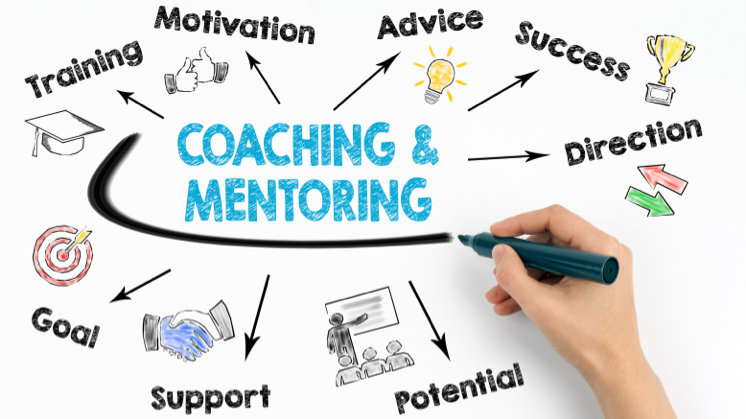
Nowadays, various centres are offering Mentoring and coaching programs. Before getting knowledge about the programs, it is essential to know about mentoring and coaching; these words seem interchangeable; however, the meaning of both is a little different. Through this article, you will get detailed knowledge about coaching, mentoring and their several programs.
Coaching in a workplace includes a relationship between an employee and a professionally trained coach. The coach provides a guide to the employee with particular exercise and experiences that will assist him in accomplishing his goals.
On the other hand, mentoring includes a partnership between a mentor and mentee in a workplace, and both of them are usually internal employees. The mentor has knowledge and experience, while the mentee wants to learn. It means the mentor act as a guide, sharing knowledge and experiences, which the mentee requires to move further in the career.

The coaching and mentoring might sound identical, and they are, but there are some critical differences in the two relationships. Coaching is a short-term tool used when a particular task or actions need to be completed. However, mentoring is a long-term relationship that is managed by a mutual goal set at the start. Succinctly, you can take a mentoring and coaching course according to your choice.
The main focus of mentorships programs is on business goals and career development. Coaches are there to enhance job performance and productivity. Indubitably, mentors are more focused on long-term development and future career paths, while coaches are focused on growth now.
Mentoring Program Differentiators
- The relationship is mentee-driven; however, the mentor is guiding through the career path.
- In an organisation mentoring is used by all levels. And there is a vast pool of participants available.
- Mentees have the choice to choose their mento match depending on their competencies and profiles.
- Succinctly, it is a full-time job for the mentor. It cannot be said that the role descriptions and mentor training can be avoided.
- Mentees and mentors normally belong to the same organisation.
- Mentoring can be a cost-effective solution because the mentor is usually a volunteer.
Coaching Program Differentiators
- The coach provides knowledge and specific skills to the employee.
- Coaching programs focus on high-potentials and leaders, and it limits the number of participants.
- Depending on the skills employees need to develop, the coaches are generally assigned to a particular employee.
- Coaches are well trained for their jobs because coaching is mostly their full-time job.
- Also, like mentoring, coaching is usually not a part of the same company as the employee.
- These programs cost more than mentoring programs as the coach is not a volunteer.
Indubitably, it is crucial to do some research before choosing a mentoring and coaching program.